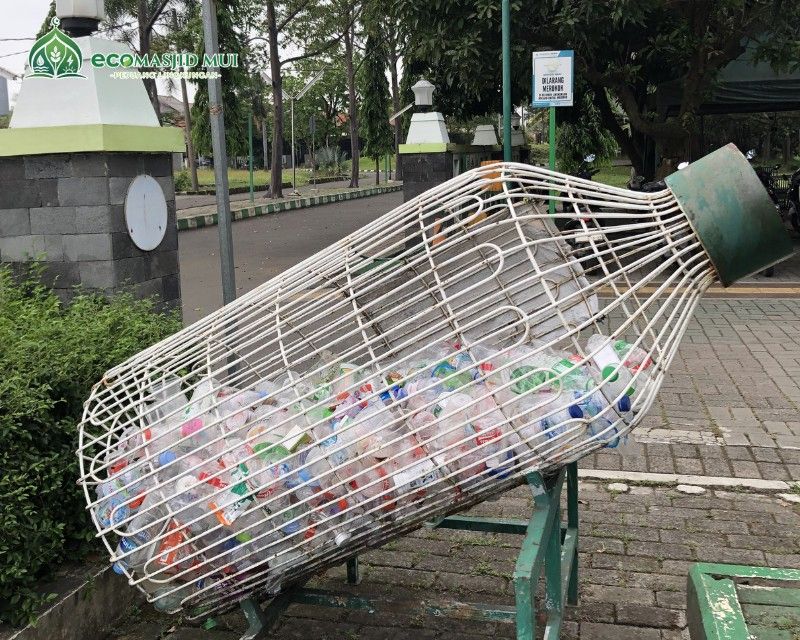
Waste sorting is the process of separating waste into categories such as:
organic waste
inorganic waste
plastic waste
paper waste
light hazardous waste
In mosques, this system is implemented by providing separate bins for each type of waste.
Mixed waste is difficult to recycle and can pollute the environment.
By sorting waste, mosques can:
maintain mosque cleanliness
reduce environmental pollution
reduce waste sent to landfills
support recycling activities
educate the community about environmental care
This program can be implemented by:
large mosques
small prayer rooms
Islamic boarding schools
Islamic schools
households
community groups
Waste sorting is carried out daily during mosque activities, especially after:
Islamic studies
religious gatherings
communal meals
social events
daily congregation activities
Usually placed in:
mosque courtyards
ablution areas
multipurpose halls
mosque cafeterias
parking areas
congregation activity spaces
Waste is separated by type
Different bins are labeled clearly
Organic waste can become compost
Inorganic waste can be recycled
Waste is collected and managed regularly
The mosque environment becomes cleaner and healthier
Waste sorting is a simple action with significant environmental benefits.
By making waste sorting a habit, mosques can become centers of environmental education and real examples of sustainability for future generations.