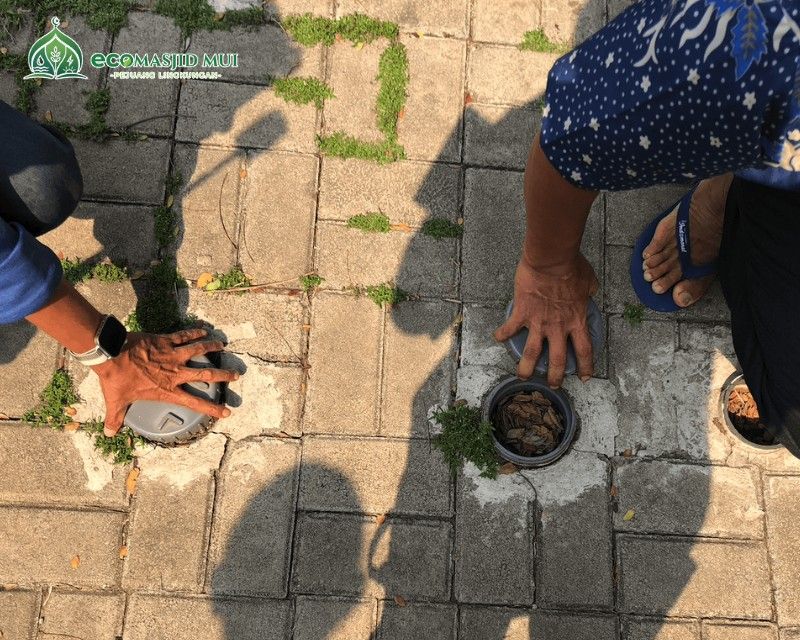
Biopore holes are small cylindrical vertical holes made in the soil to help rainwater absorb more quickly.
These holes are usually filled with organic waste such as dry leaves, food scraps, and grass, which later decompose into natural compost.
In mosques, biopore holes help reduce water puddles and improve organic waste management.
During rainfall, large amounts of water flow across the ground surface and often cause flooding or puddles.
At the same time, organic waste is often discarded without proper use.
By creating biopore holes, mosques can:
improve rainwater absorption
reduce flooding and puddles
maintain groundwater reserves
reduce organic waste
produce natural compost for plants
create a greener and cleaner mosque environment
Biopore systems can be implemented in:
large mosques
small prayer rooms
Islamic boarding schools
Islamic schools
community parks
residential homes
This system is simple and affordable to build.
Biopore holes work continuously, especially during rainfall.
Rainwater quickly infiltrates through the holes into the soil.
The organic waste inside naturally decomposes into compost.
Usually installed in:
mosque yards
mosque gardens
parking areas
near drainage systems
green open spaces
around trees and plants
Vertical holes are made in the soil
The holes are filled with organic waste
Rainwater enters the holes
Water infiltrates quickly into the ground
Organic waste decomposes into compost
The soil becomes more fertile and groundwater reserves are maintained
Biopore holes are a simple yet highly beneficial solution for mosques and the environment.
By implementing biopore systems, mosques can reduce flooding, manage organic waste, preserve groundwater, and create a greener environment for future generations.